Treatment (July 9, 2026)
In 1961, Singapore’s first Women’s Charter was passed. This was a landmark moment for Singapore post-colonial rule. In fact, the next 4 years would prove to be a period of momentous change for the island. In the years leading up to 1965 and beyond, Singapore would undergo radical shifts in the institutions that established society. The 1961 Women’s Charter, while focused primarily on elevating the women in marriage and home (banning polygamy and forced marriages, and giving women the legal right to own property independently), it was really the first step towards fighting against the injustices and inequality experienced by women in Singapore. Clearly, women in 1960s Singapore existed and contributed far more than to just families and households, but the Singapore Women’s Council saw the institution of marriage as a strategic vehicle to bring the fight for women’s rights where it could make a change – Parliament.
I wonder what happened to the many second and third wives, or any of the women who were divorced, or did not fit into the image of an ideal woman during that period?
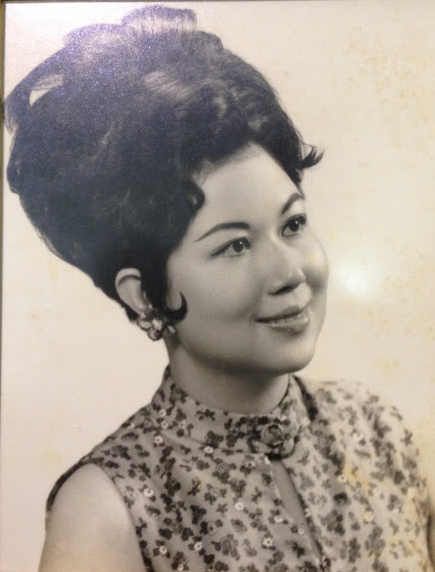
My grandmother was a divorcee and a second wife. In fact, she worked as an entertainer and lived in Geylang, probably a getai type establishment. I remember when she watched me on the professional stage for the first time, she came up to me and said, “Back then Por Por was only pretty, you’re actually talented.” In fact, it was her beauty that caught the eye of my stepgrandfather. My family lore is that my stepgrandfather, who was a very prominent and celebrated “Tan Sri” in the 1960s-80s, saw her at one of her performances and fell in love. For some reason I can’t seem to find any public mention of her name or acknowledgement that he had more than one wife. And since Malaysia only banned polygamy in 1982, I guess the reality checks out, my grandmother remains nameless.

We celebrate our early nation’s accomplishments, and that certainly includes the Singapore Women’s Charter of 1961. However, like the moment of Separation from Malaysia, we seem to have forgotten that these important moments that we monumentise now were actually tense moments where ideology was being contested.
The passing of the 1961 Women’s Charter, after the founding of the Singapore Council of Women (SCW) in 1952, is arguably a milestone in the women’s movement in Singapore. Whether our founding mothers realised it or not, the debates and rhetoric that lobbied for the Charter concretised and established that the legitimate family was only between one man and one woman. In theory, official second and third wives were protected, but the real stories of our mothers say otherwise, that things were more complicated than law.
I can’t find any reference or marriage document that would allow me to legitimately call it a divorce, but it is fact that my grandmother separated from my stepgrandfather eventually, and returned to Singapore with a second son in tow, where she lived the rest of her life as a single mother of two sons from two different fathers.
Without a law in place, it must have been a real messy separation for her and that Tan Sri.
The plot of La Traviata is actually rather straightforward: a high status man falls in love with a woman on the fringe of high society. His father disapproves, because she is not a respectable woman, and is a black mark on the family name. What makes this opera tragic and so moving is not the story itself, but the given circumstances and social structures of which Alfredo and Violetta are subject to in the 1890s Paris. Violetta and Alfredo were indeed in love, they lived together in the countryside, outside of the prying eyes of proper Paris. But why did they never get married? We could think that Violetta chose freedom (Sempre Libra) but it’s more likely that Violetta was not regarded as a proper woman.
In modern lingo, my grandmother “broke up” with her second partner, I’ve been told because she felt she could never stand on her own in view of his higher status. If my grandmother lived now, would the stigma of her status as entertainer, divorcee and single mother haunt her the same way it did? During their “marriage” she referred to my dad, born from her first marriage, as her younger brother. My father called his stepfather “brother-in-law”.
After the SCW got the Charter passed, the Council lost momentum, membership declined and eventually was dissolved in 1971. One source said, “the organization undertook the planning of social events so that ‘young women will have a chance to mix and get to know each other’, but such activities did not offer a comparable sense of mission and urgency.” It would take another decade or more before the next chapter of the Singapore women’s movement would celebrate its next win.
I hope that with the 1961 Women’s Charter as an ideological departure point we are able to construct a creative engine for this well-loved opera that resonates for Singapore. That we are able to reject an Occidental orientation that makes staging deeply loved operas in a post-colonial awakening cringey. To go beyond mere rejection, rooting our interpretation of La Traviata in that moment of 1961 opens a view into the polarities that surround gender equality and propriety. Or at the very least, to remember our mothers who were forgotten, because they were invisible in the institution of marriage.

